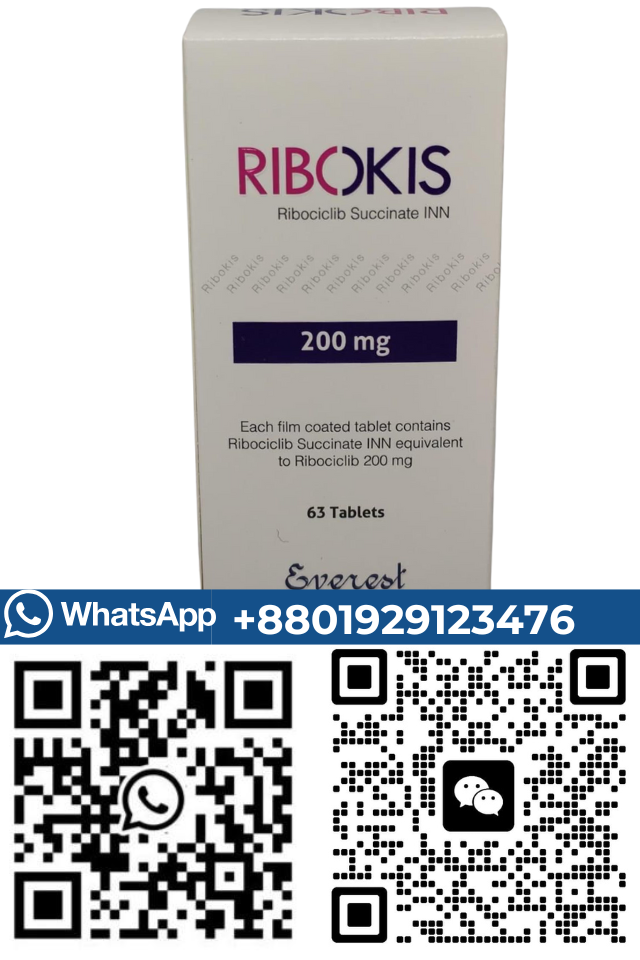
Kisqali Generic – Ribokis Ribociclib 200mg HR+/HER2– Advanced or Metastatic Breast Cancer:
Ribociclib 200mg (Ribokis) is indicated for the treatment of hormone receptor-positive, HER2-negative advanced or metastatic breast cancer in:
-
Postmenopausal women in combination with an aromatase inhibitor as first-line endocrine therapy.
-
Premenopausal and perimenopausal women when combined with an aromatase inhibitor plus an LHRH agonist.
-
Combination with fulvestrant in women with disease progression following endocrine therapy.
-
Adult men with HR+/HER2– metastatic breast cancer.
Pharmacology
Ribociclib is a selective CDK4/6 inhibitor that blocks the activity of cyclin-dependent kinases 4 and 6. These enzymes promote cell cycle progression from the G1 to S phase, enabling cancer cell division.
By inhibiting CDK4/6, Ribociclib:
-
Prevents phosphorylation of Rb protein
-
Causes G1 cell cycle arrest
-
Reduces proliferation of HR+/HER2– breast cancer cells
This mechanism enhances the therapeutic effect of endocrine therapy.
Dosage & Administration
Oral Administration Only
-
Recommended Dose: 600 mg once daily (three 200mg tablets)
-
Schedule: 21 days on treatment, followed by 7 days off (28-day cycle)
-
Can be taken with or without food
-
Swallow tablets whole; do not crush, chew, or split
Dose Adjustments Required For:
-
Grade 3–4 neutropenia
-
Elevated liver enzymes
-
QT interval prolongation
-
Serious toxicities
Missed dose: skip and resume next scheduled dose.
Vomited dose: do not retake; resume regular dosing time.
Interaction
-
Strong CYP3A4 inhibitors (ketoconazole, clarithromycin) ↑ Ribociclib levels — avoid.
-
Strong CYP3A4 inducers (rifampicin, phenytoin) ↓ effectiveness — avoid.
-
Avoid co-administration with QT-prolonging medications.
-
Avoid grapefruit products.
Contraindications
-
Hypersensitivity to Ribociclib
-
Severe uncontrolled cardiac disease
-
Concurrent use with strong CYP3A4 inhibitors
-
Severe active infections
Side Effects
Common side effects:
-
Neutropenia
-
Nausea, vomiting
-
Fatigue
-
Alopecia
-
Diarrhea
-
Headache
-
Elevated liver enzymes
-
Rash
Serious adverse reactions:
-
QT interval prolongation
-
Hepatotoxicity
-
Severe infections
-
Pneumonitis
Seek immediate medical care for fever, chest pain, shortness of breath, or signs of infection.
Pregnancy & Lactation
Pregnancy
-
Can cause fetal harm
-
Not recommended during pregnancy
-
Effective contraception required during treatment
Lactation
-
Unknown if excreted in breast milk
-
Breastfeeding is not recommended during therapy and for at least 3 weeks after the final dose
Precautions & Warnings
-
CBC monitoring required regularly
-
Monitor liver function in all cycles
-
ECG monitoring required for QT interval
-
Avoid use in patients with congenital long QT syndrome
-
Discontinue temporarily in case of severe infection
-
Be alert for symptoms of lung toxicity
Therapeutic Class
CDK4/6 Inhibitors — Targeted Anticancer Agents
Storage Conditions
-
Store below 25°C
-
Keep in original packaging
-
Protect from moisture & light
-
Keep out of reach of children